

A coastal garden succeeds when it is planned around exposure: how much salt and wind reach each part of the block. This guide covers the zones from the dune back to the sheltered courtyard, the natives that evolved for them, and the order to build in.
What coastal actually means for plants
Australia has around 36,000 kilometres of coastline and most of the population lives near it, but "coastal garden" covers wildly different conditions. The distance from the water changes the plant list completely.
| Zone | Conditions | What survives |
|---|---|---|
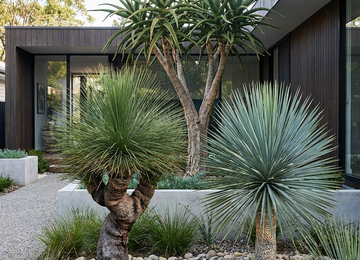
| Front line, direct salt spray | Salt, wind, sand, no shelter | Pigface, coastal screw pine, westringia, coast banksia |
| Second row, filtered exposure | Salt-laden wind, sandy soil | Tuckeroo, foxtail palm, casuarina, dianella |
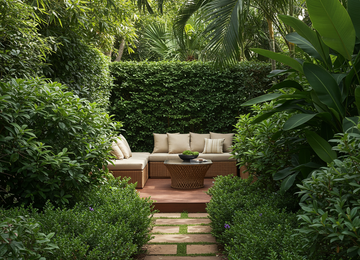
| Sheltered behind a windbreak | Mild, some salt in the air | Lilly pilly, magnolia, most garden plants |
| Estuarine and low-lying | Salt in soil, periodic wet | Melaleuca, swamp banksia, Juncus, Carex |
The mistake is treating a beachfront position and a suburb three streets back as the same thing. Three streets of shelter transforms what will grow.
Australian natives that evolved for this
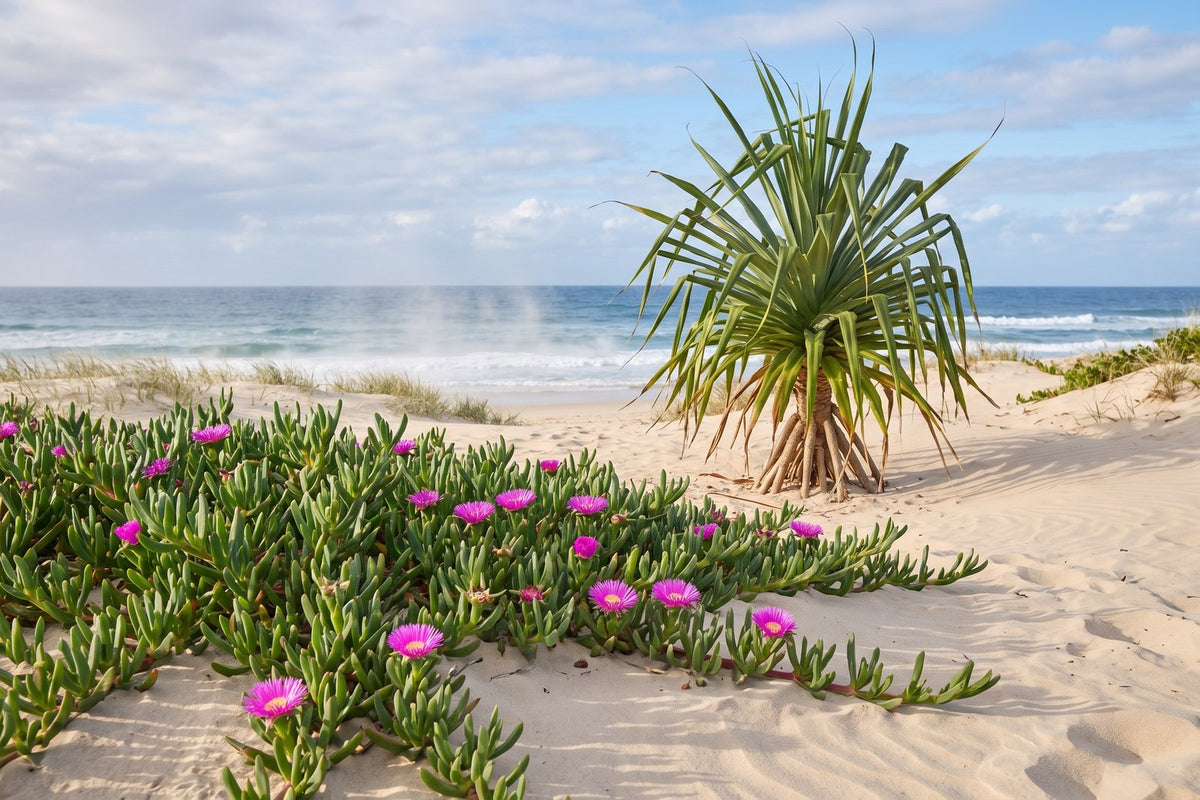
- Coastal screw pine (Pandanus pedunculatus) - grows on eastern Australian dunes, with stilt roots that anchor against wind. The defining beachfront plant of Queensland and northern NSW.
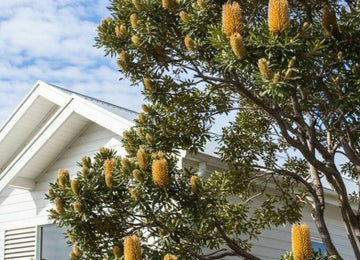
- Coast banksia (Banksia integrifolia) - naturally occurs on exposed dunes and headlands, and feeds honeyeaters through autumn and winter.
- Westringia - clifftop native from the New South Wales coast; salt, wind, drought and clipping all leave it unbothered.
- Pigface (Carpobrotus) - dune succulent that holds sand, needs no irrigation and flowers vividly.
- Casuarina - fine foliage filters wind rather than blocking it, which is exactly what a coastal windbreak needs.
- Tuckeroo - tidy canopy, salt tolerant, and a standard east-coast street tree for that reason.
Build the windbreak first
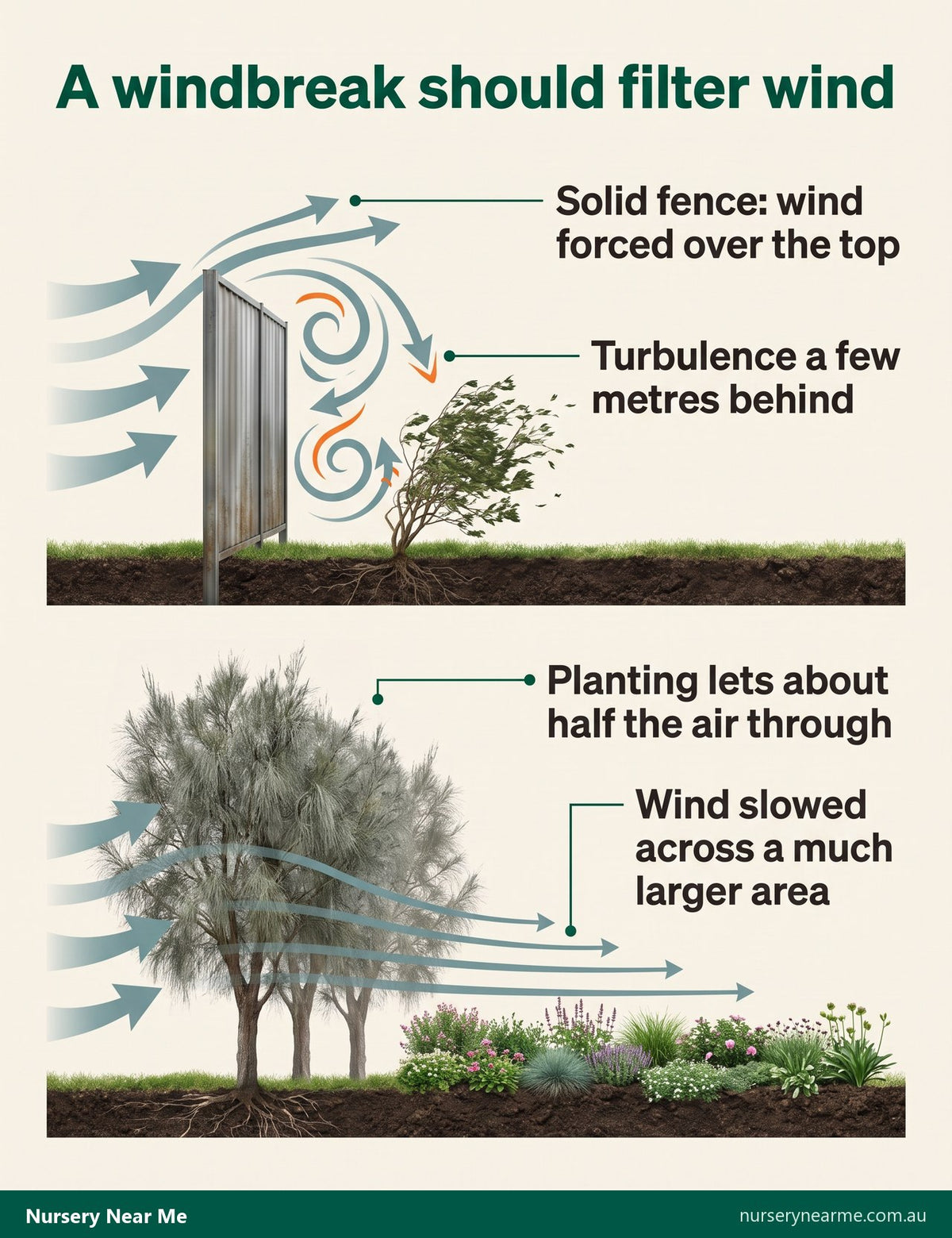
This is the sequence that makes a coastal garden work. Nothing much grows on an exposed site until something breaks the wind, so the first planting is structural rather than decorative.
Use permeable planting rather than a solid fence. A solid barrier accelerates air over the top and drops it as turbulence behind, often causing more damage a few metres back. A row of casuarina, westringia or coast banksia that lets roughly half the air through slows wind across a much larger area, and everything you plant behind it becomes possible.
Sandy coastal soil
- Add organic matter constantly. It breaks down fast in warm sandy soil, so this is ongoing rather than one-off.
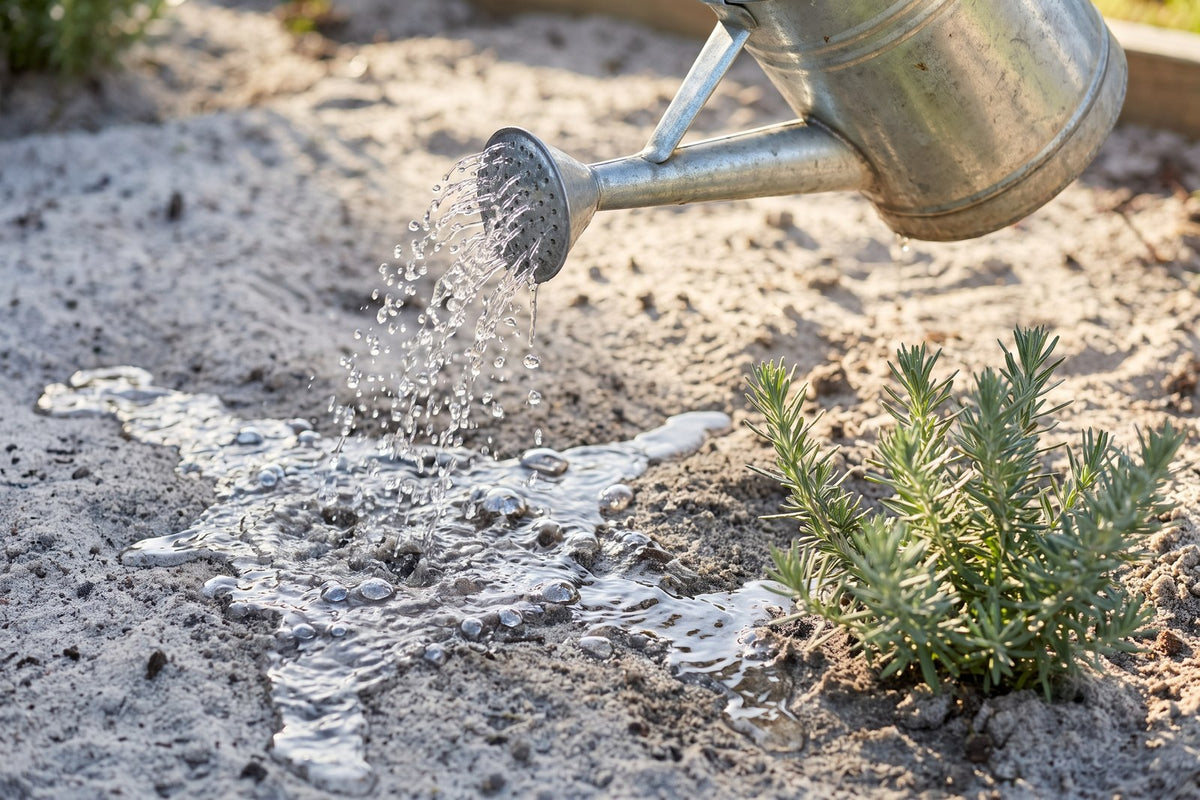
- Check for water repellency. Coastal sands frequently become hydrophobic - if water beads rather than soaking in, apply a wetting agent.
- Watch the pH. Sands near limestone are often alkaline, which locks up iron and causes persistent yellowing in gardenias, citrus and camellias.
- Mulch heavily to reduce evaporation and moderate soil temperature.
- Use controlled-release fertiliser - soluble feeds leach straight through sand.
Managing salt
Rinse foliage with fresh water after strong onshore blows, before salt accumulates. Leach beds periodically with a deep watering to flush salts below the root zone. And direct pool backwash to the sewer rather than into planting - salt-chlorinated pool water does more damage to a coastal garden than sea spray does.
Check before you plant near the dune
Coastal dune systems are protected in most Australian states, and planting, clearing or removing vegetation on public dune land generally requires council or state approval. If your boundary adjoins a reserve or dune, check with your council first - and avoid species that seed into those systems.
Related guides
Coastal natives such as saltbush and pigface suit gardens exposed to salty wind, along with hardy succulents and coastal grasses.
Two of the most reliable performers on an exposed front line are westringia, which shrugs off salt spray and clips into low hedges, and the tough, long flowering seaside daisy for the front of a bed.
Our full list of the best plants for coastal gardens covers the rest.
For the structural layer, the tuckeroo tree is the classic salt hardy shade tree for an Australian coastal block, and the beach spider lily brings fragrant white flowers to sandy ground where little else looks deliberate.
Ready to plant?
Browse the full range in plants for coastal areas, add shelter from the salt wind with plants for windbreaks, or keep the water bill down with low water plants. We ship live plants nationally, backed by our 30 day satisfaction guarantee.
For a garden that has to sit in a bushfire zone, the bushfire-wise planting guide explains the design rules the fire agencies publish and which plants appear on their lists.
If there is a sewer or stormwater line anywhere near the planting spot, our planting near pipes guide gathers the water utilities' distances and their lists of trees to avoid.


